

You expected the stock to rise, so you bought a call. The stock did rise, and you still lost on the contract. That does not happen to someone who bought the stock itself. The difference comes down to three things: time, price and leverage. This page shows them with one example in numbers.
What are options, in short?
An option is a contract: a right you buy for a small price, not the stock itself. A call gives you the right to buy the stock at a fixed price. A put gives you the right to sell it. The right has an expiration date. After that date it is worth nothing unless it is in profit.
An example in numbers: one stock, two ways
A stock trades at $100. You have two ways to profit if it rises:
- Buy 100 shares: you pay $10,000.
- Buy one call: the strike price is $105, it expires in 30 days, and its premium is $2 per share. One contract covers 100 shares, so you pay $200.
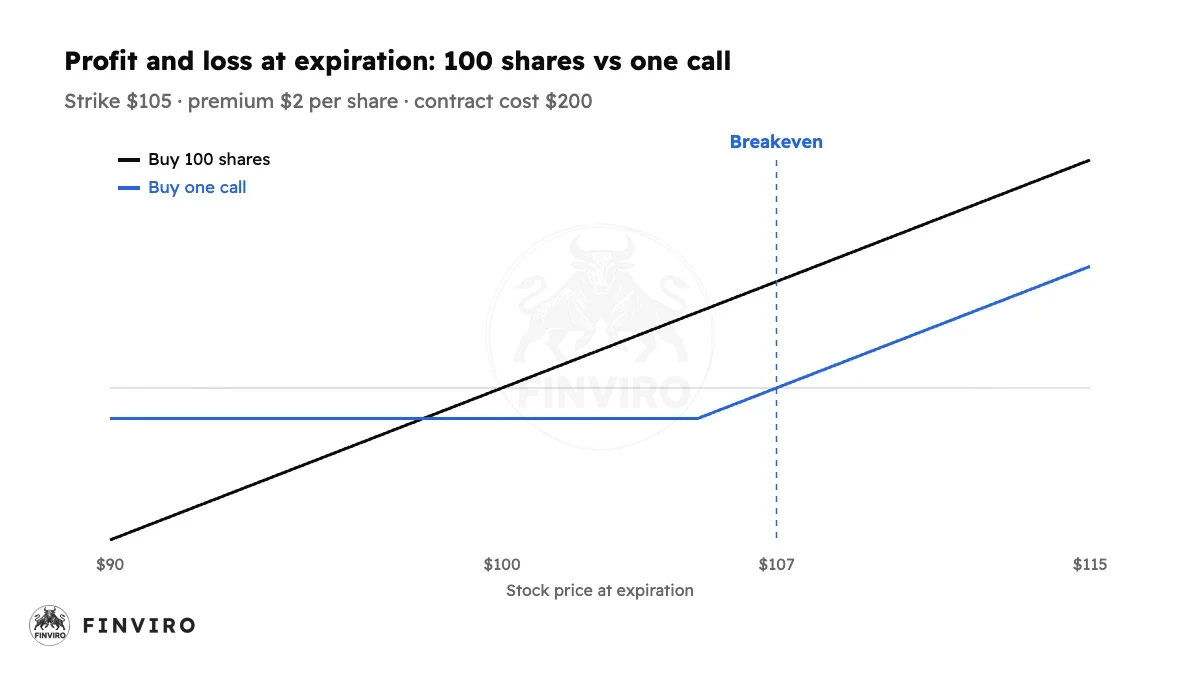
This is what you have on the expiration day:
| Stock price after 30 days | 100 shares | One call |
|---|---|---|
| $110 | +$1,000 (10%) | +$300 (150%) |
| $107 | +$700 (7%) | $0: breakeven |
| $103 | +$300 (3%) | -$200 (100%) |
| $100 | $0 | -$200 (100%) |
| $90 | -$1,000 (10%) | -$200 (100%) |
Read the third row again. The stock rose 3%, as you expected, and the call lost its whole price. A call only makes money above the strike plus the premium: $105 + $2 = $107.
The difference in one table
| Item | Stock | Option |
|---|---|---|
| What you own | Part of the company | A temporary right on the stock |
| Time | No expiration | Expires on a fixed date |
| Capital in the example | $10,000 | $200 |
| Maximum loss for the buyer | The full value of the stock | The full premium |
| What it needs to profit | Any rise | A rise above breakeven before expiration |
| Dividends | You receive them | You do not receive them |
Why does a call lose when you are right about the direction?
For two reasons. First, breakeven: the rise must pass the strike plus the premium. Second, time: the contract loses part of its value every day. This is time decay, and a number called theta measures it. The closer the expiration, the faster the decay.
On Finviro, every contract card on the unusual options page shows "Before you buy: what this contract needs": the breakeven, the move it needs, how much it loses each day, and what happened to similar contracts we tracked before.
Frequently asked questions
Which is riskier: the stock or the option?
An option buyer loses a small amount at a high percentage, and often loses all of it. A stock owner loses more slowly, but more money is at risk. The difference is the shape of the loss, not whether there is one.
Do I have to wait until expiration?
No. You can sell the contract at its market price at any time before it expires.
Where do I start?
With the academy course: short chapters that start with what options are, then the premium, then time.
